Observational studies and therapeutic trials are vital to ALS research. By learning more about the disease and our patients, we can advance the investigation of future treatments.
What study is right for you? Contact us:
1-844-ALS-Care
1-844-257-2273
ALS@wustl.edu
Observational Studies
ASSESS ALL ALS
ASSESS ALL ALS is part of the newly established ALL ALS Research Consortium, an NIH-funded initiative to advance ALS research. This study collects clinical data and blood samples from people with ALS which will be made broadly available to the research community. In-person and remote participation options are available.
Principal Investigator: Timothy Miller, MD, PhD
Participants: Open to patients with ALS and healthy controls
Contact
1-844-ALS-Care
ALS@wustl.edu
Study Location & Directions
Center for Outpatient Health
PREVENT ALL ALS
Also a part of the ALL ALS Research Consortium, the PREVENT study will provide genetic testing of known ALS causative genes and perform longitudinal evaluations for people with genetic ALS in their family. This study will identify biomarkers and early disease measures of disease onset. Genetic testing can be done without revealing results. The study involves annual in-person visits plus remote visits every 4 months.
Principal Investigator: Timothy Miller, MD, PhD
Participants: Open to first-degree relatives of patients with dominantly-inherited ALS or FTD
Contact
1-844-ALS-Care
ALS@wustl.edu
Study Location & Directions
Center for Outpatient Health
Target ALS Longitudinal Biofluid Study
This study will collect a wide range of samples, clinical information, and at-home measurements for future ALS and neurologic disease research. Samples such as blood, cerebral spinal fluid (CSF), and urine will be collected over a period of 12 to 16 months from both healthy volunteers and ALS participants, respectively. All samples collected will be stored in a central repository and made available to the wider research community in an effort to identify biomarkers and treatment targets for ALS. Participants will also undergo speech and breathing measurements at home via an app on a smartphone or tablet.
Principal Investigator: Timothy Miller, MD, PhD
Participants: Open to patients with ALS and healthy volunteers
Contact
1-844-ALS-Care
ALS@wustl.edu
Study Location & Directions
Center for Outpatient Health
DNA Repository
This project will collect one blood sample from which your DNA is extracted and banked in our DNA database. The database enables researchers to perform research into the genetic causes of ALS.
Principal Investigator: Timothy Miller, MD, PhD
Participants: Open to patients with Neuromuscular Disorders, ALS and healthy controls
Contact
1-844-ALS-Care
ALS@wustl.edu
Study Location & Directions
Center for Outpatient Health
Blood Biomarkers
This project will collect blood samples over time to help identify changes in biomarkers which may be therapeutic targets. Blood collections can be done at regular clinic visits.
Principal Investigator: Timothy Miller, MD, PhD
Participants: Open to patients with Neuromuscular Disorders, ALS and healthy controls
Contact
1-844-ALS-Care
ALS@wustl.edu
Study Location & Directions
Center for Outpatient Health
CSF Biomarker Repository
CSF is fluid that bathes the brain and spinal cord and protects them from damage. Since CSF is so closely involved in the nervous system, this fluid provides one of the most useful pictures of changes that occur during neurodegeneration in ALS. This project involves collection of CSF via a lumbar puncture. This procedure takes approximately two hours and can be scheduled at your convenience.
Principal Investigator: Timothy Miller, MD, PhD
Participants: Open to patients with Neuromuscular Disorders, ALS and healthy controls
Contact
1-844-ALS-Care
ALS@wustl.edu
Study Location & Directions
Center for Outpatient Health
Protein Kinetics
This study aims to learn more about proteins involved in ALS and other neurodegenerative diseases. Research into these proteins may provide new insights into biomarkers and help to refine dosing for both existing and future ALS medications. The study involves an initial overnight IV infusion followed by 11 lumbar punctures spread out over approximately 14 months. For those already receiving regular lumbar punctures as part of your ALS treatment, study visits can be combined with regular clinic visits and adjusted to match your existing treatment schedule.
Principal Investigator: Cindy Ly, MD, PhD
Participants: Open to patients with ALS, asymptomatic gene carriers, and healthy controls
Contact
1-844-ALS-Care
ALS@wustl.edu
Study Location & Directions
Center for Outpatient Health
Therapeutic Trials
HEALEY Platform Trial
This is a Phase 2/3 multi-center, multi-drug clinical trial to evaluate the safety and efficacy of investigational products for the treatments of ALS. Eligible participants will be randomized to one of multiple regimens (or research drugs). Within each arm, each participant will be randomized to either drug or placebo. The treatment will last a maximum of 24-weeks with an optional open label extension. For each drug, study visits which will occur every 4 weeks either in clinic (seven clinic visits) or phone-based. Once a participant has completed a drug, they can be re-randomized back into the study for a different drug.
Principal Investigator: Timothy Miller, MD, PhD
Participants: For patients with all forms of ALS, please contact us to see if you meet criteria
Contact
1-844-ALS-Care
ALS@wustl.edu
Trial Location & Directions
Center for Outpatient Health
Coya ALSTARS
This Phase 2 trial will evaluate the evaluate the effectiveness of an experimental therapy called COYA 302, which is a combination of two existing drugs – low dose IL-2 and abatacept. COYA 302, which is administered by an injection under the skin, is designed to increase the activity of regulatory T-cells (Tregs), a type of cell which can help mediate the immune system and reduce inflammation.
Participants will be randomized to one of two different doses of COYA 302 or placebo for six months. Participants who complete the initial portion of the study may then continue to an extension period in which everyone receives COYA 302.
Principal Investigator: Timothy Miller, MD, PhD
Participants: For patients with all forms of ALS, please contact us to see if you meet criteria
Contact
1-844-ALS-Care
ALS@wustl.edu
Trial Location & Directions
Center for Outpatient Health
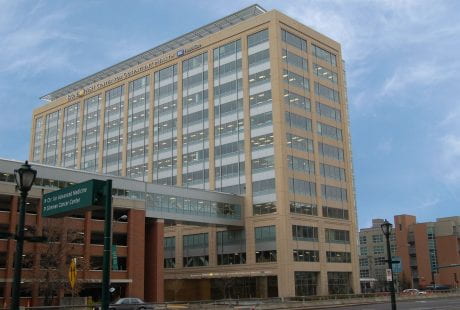
Center for Outpatient Health
Clinical Translational Research Unit (CTRU); 5th floor
-
Mailing Address:
4901 Forest Park Avenue
5th Floor; Clinical Translational Research Unit
St. Louis, MO 63108 - Phone: 1-844-257-2273